Purpose Endoscopic vacuum therapy (EVT) has emerged as a highly effective approach for managing gastrointestinal transmural defects and may offer advantages over traditional methods, such as stenting. This study evaluated the clinical outcomes of EVT for gastrointestinal transmural defects resulting from leakages, perforations, and fistulas.
Methods We retrospectively reviewed patients who underwent EVT for gastrointestinal transmural defects at Ewha Womans University Medical Center between February 2018 and September 2025 and analyzed clinical outcomes, adverse events, and risk factors associated with adverse events.
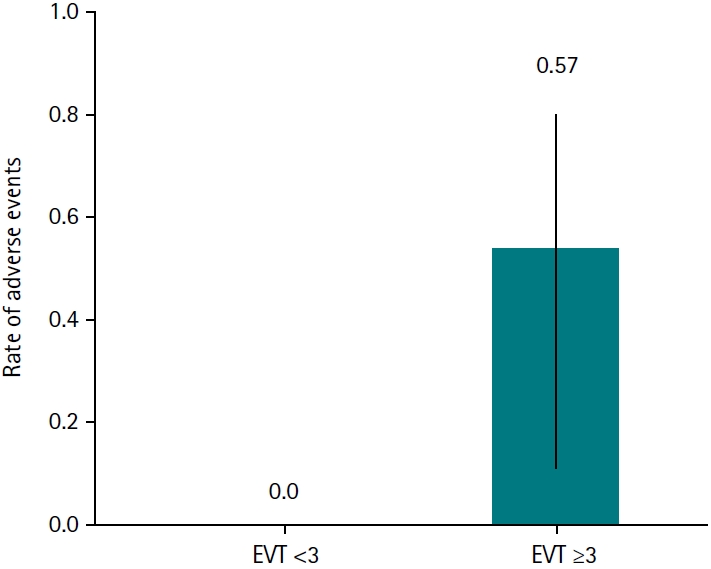
Results Fourteen patients were included (mean age, 63.9 years; 85.7% male). Stomach surgery was the most common etiology (50.0%), and malignancy accounted for 71.4% of cases. The median number of EVT sessions was 2.5, and the mean interval from the index event to the first EVT session was 10.5 days. EVT achieved a 100% technical success rate, with no 30-day mortality; there was 1 in-hospital death (7.1%), 2 cases of stricture (14.3%), and 1 major bleeding event (7.1%). Adverse events were observed more frequently in patients who underwent ≥3 EVT sessions (57.1%) compared with those who underwent <3 sessions, in whom no adverse events occurred.
Conclusion This study suggests that EVT is a safe and effective treatment for gastrointestinal transmural defects, with high technical success rates. The number of EVT sessions and the timing of treatment initiation appeared to be associated with complications and overall clinical outcomes.


 , Ki-Nam Shim
 First
First Prev
Prev