Purpose Healthcare planning and resource allocation require accurate estimates of the burden of motor neuron diseases (MNDs). This study evaluated the global impact of MNDs from 1990 to 2021 as part of the Global Burden of Disease (GBD) Study 2021.
Methods GBD 2021 data were used to assess the global burden of MNDs from 1990 to 2021 in terms of prevalence, incidence, disability-adjusted life years (DALYs), and deaths. The relationship between MND burden and the Socio-demographic Index (SDI) was also examined.
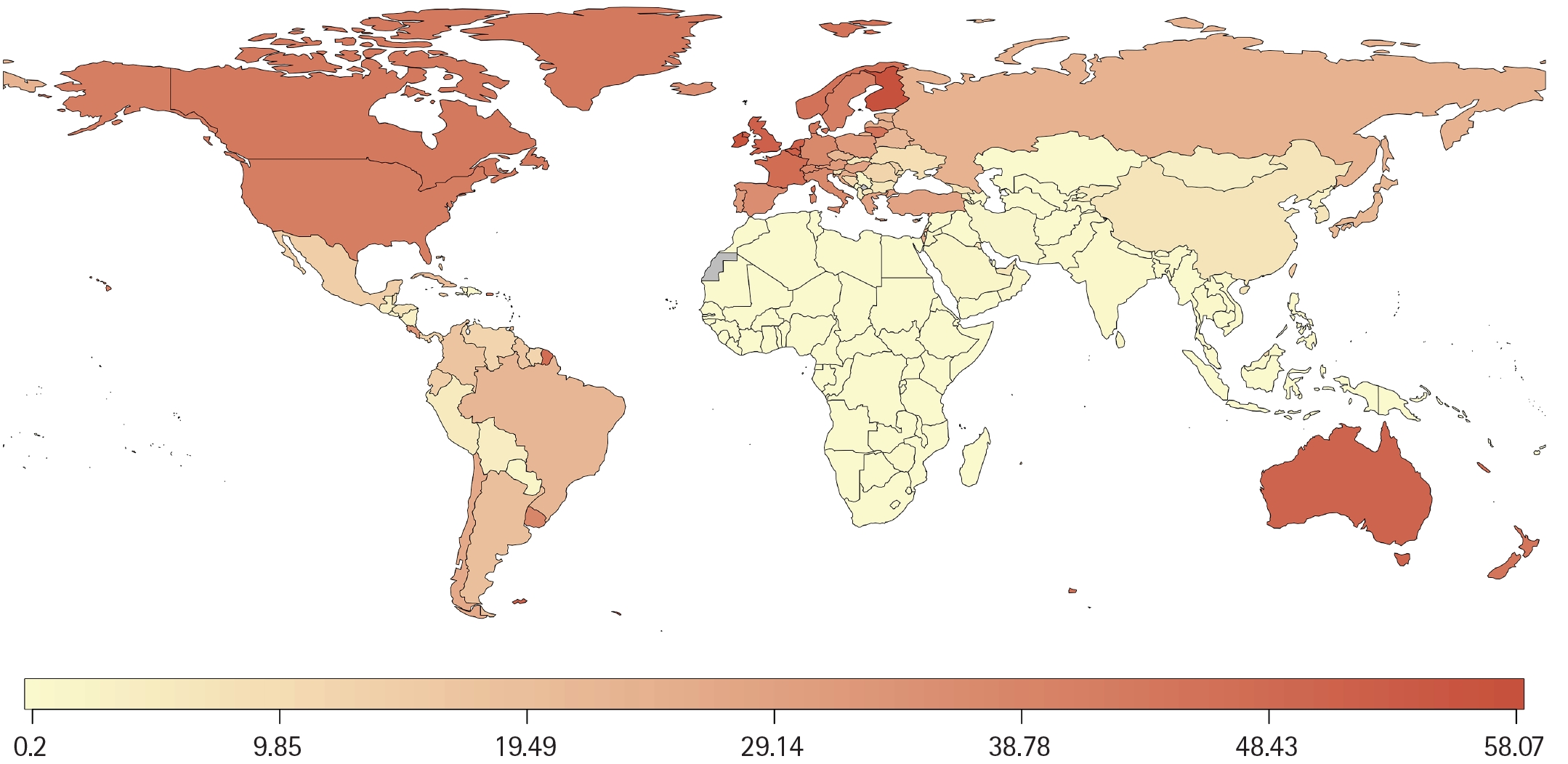
Results Globally, MNDs accounted for 272,732 prevalent cases (95% uncertainty interval [UI], 236,195–313,676), 64,178 incident cases (95% UI, 58,506–70,270), 1,040,566 DALYs (95% UI, 963,064–1,123,956), and 39,082 deaths (95% UI, 35,757–42,433) in 2021. The corresponding age-standardized rates per 100,000 people were 3.31 (95% UI, 2.86–3.80) for prevalence, 0.46 (95% UI, 0.42–0.49) for mortality, and 12.17 (95% UI, 11.24–13.15) for DALYs. From 1990 to 2021, the numbers of prevalent and incident cases increased, but their age-standardized rates decreased by 1.36% and 4.69%, respectively. By contrast, the age-standardized mortality rate increased by 19.84%. MND burden was generally higher in regions with a high SDI, although rates in high-income Asia Pacific were relatively low compared with those in regions with similar SDI values.
Conclusion From 1990 to 2021, the absolute burden of MNDs increased, age-standardized prevalence and incidence rates declined slightly, and mortality-related burden increased. These trends underscore the need for evidence-based national and global healthcare planning. Geographic variation in MND burden may reflect regional differences in the roles of sociodemographic and genetic factors.
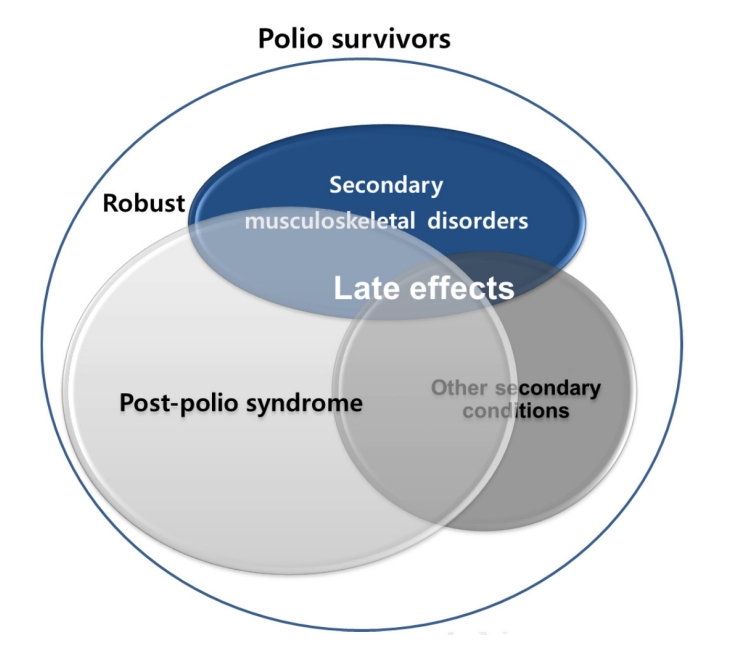
This study aimed to provide a comprehensive understanding of aging with disability among polio survivors who continue to live with long-term sequelae. Although poliomyelitis has been eradicated in most regions, survivors entering older age face a dual challenge, as age-related decline overlaps with pre-existing impairments, creating a need for integrated management strategies. This narrative review examined the epidemiology, clinical manifestations, and late effects of polio, with particular attention to post-polio syndrome, secondary musculoskeletal disorders, and other systemic conditions. International and Korean studies were compared to highlight similarities and contextual differences. Polio survivors frequently experience accelerated functional decline due to post-polio syndrome, fatigue, pain, musculoskeletal disorders (e.g., arthritis, osteoporosis, fractures), and cardiopulmonary dysfunction. Approximately 64% report major falls, with 35% sustaining fractures, often at vulnerable sites such as the hip or distal femur. Psychological distress, sleep disturbances, metabolic syndrome, and cardiovascular disease are also prevalent, further compounding frailty. In Korea, where most survivors are now over 60 years of age, epidemiological patterns differ from those of Western cohorts; however, systematic investigations remain limited. Polio survivors exemplify the dual burden of aging and long-term disability, underscoring the need to move beyond fragmented, symptom-focused care toward integrated, life course–oriented approaches. Anticipating and managing late effects, strengthening preventive strategies, and ensuring equitable healthcare access are essential for maintaining function, independence, and quality of life. Lessons drawn from polio survivors offer valuable insights for understanding aging with disability more broadly.
Citations
Citations to this article as recorded by
A silent epidemic? Poliomyelitis, disability burden, and social impact in Turkey (1942–1968) Ayşe Erkmen, Nevim Tüzün, Osman Erkmen BMC Public Health.2026;[Epub] CrossRef


 , Dong Keon Yon
 , Yoonkyung Chang

 First
 Prev