Appendiceal mucinous adenocarcinoma is a rare gastrointestinal malignancy that may metastasize to the ovaries and closely mimic advanced primary ovarian cancer, creating diagnostic and therapeutic challenges. A 61-year-old postmenopausal woman presented with postmenopausal bleeding, abdominal distension, abdominal pain, and weight loss. Imaging demonstrated bilateral adnexal masses with omental caking and ascites, suggestive of advanced ovarian malignancy. Cancer antigen 125 was elevated, and carcinoembryonic antigen (CEA) levels were markedly increased. She had a history of acute appendicitis 1 year earlier. Biopsy revealed mucinous adenocarcinoma with signet-ring cells. Endoscopic evaluation was unremarkable. Despite neoadjuvant chemotherapy for presumed ovarian cancer, the disease progressed, necessitating cytoreductive surgery. Histopathological examination demonstrated bilateral mucinous adenocarcinoma with peritoneal spread. Immunohistochemistry showed positivity for cytokeratin 20, caudal-type homeobox 2, and special AT-rich sequence-binding protein 2 and negativity for cytokeratin 7 and paired-box gene 8, supporting an appendiceal origin. She was started on fluorouracil, leucovorin, and oxaliplatin chemotherapy. Metastatic appendiceal carcinoma can closely resemble primary ovarian malignancy. Bilateral mucinous ovarian tumors with elevated CEA levels and poor chemotherapy response should prompt evaluation for a gastrointestinal primary tumor.
Purpose Human papillomavirus is the dominant etiological factor underlying atypical cervical squamous epithelial cell abnormalities and cervical carcinoma. Currently, only a limited number of drugs targeting specific biomarkers in cervical cancer are available. This study aimed to assess the expression of estrogen receptor (ER), human epidermal growth factor receptor 2 (HER2), and the Ki-67 proliferative index (Ki-67) in p16-positive cervical squamous premalignant and malignant lesions, which may help clarify the potential role of targeted therapies in cervical cancer. Methods: In p16-positive, histologically proven premalignant and malignant cervical lesions, ER, HER2, and Ki-67 expression were evaluated according to predefined criteria. Results: p16 showed strong nuclear and cytoplasmic positivity in 54 of 56 cases. Patchy nuclear positivity was mainly observed in low-grade squamous intraepithelial lesion (LSIL) cases (2/56). Ki-67 demonstrated a variable proliferative index ranging from 5% to 95% across all cases, with higher indices predominantly observed in squamous cell carcinomas (SCC). ER positivity in LSIL, high-grade squamous intraepithelial lesion, and SCC was 100% (2/2), 66.7% (10/15), and 46.15% (18/39), respectively. HER2 expression was predominantly negative, observed in 78.6% (44/56) of cases, equivocal in 17.8% (10/56), and positive in 3.6% (2/56). Both HER2-positive cases were SCC. ER and HER2 interpretations were analyzed and were not significantly correlated with clinical or pathological parameters. Conclusion: ER positivity decreased with progression of cervical squamous lesions, and HER2 expression was rare in cervical squamous neoplasia. No statistically significant correlation was identified between ER or HER2 expression and clinicopathological parameters. The findings of the current study may help fill gaps in the existing literature and provide essential foundational knowledge for optimizing emerging therapeutic strategies, including ER- and HER2-related therapies.



 , Gunvanti Rathod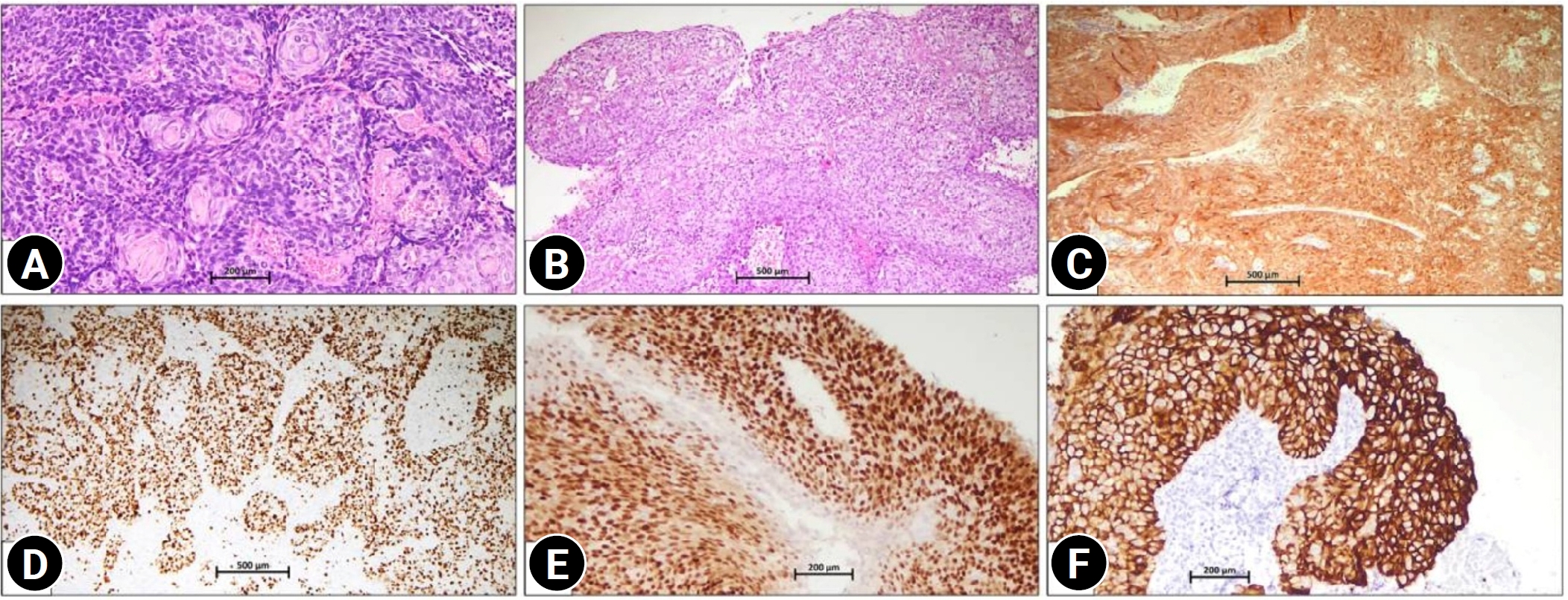
 First
First Prev
Prev