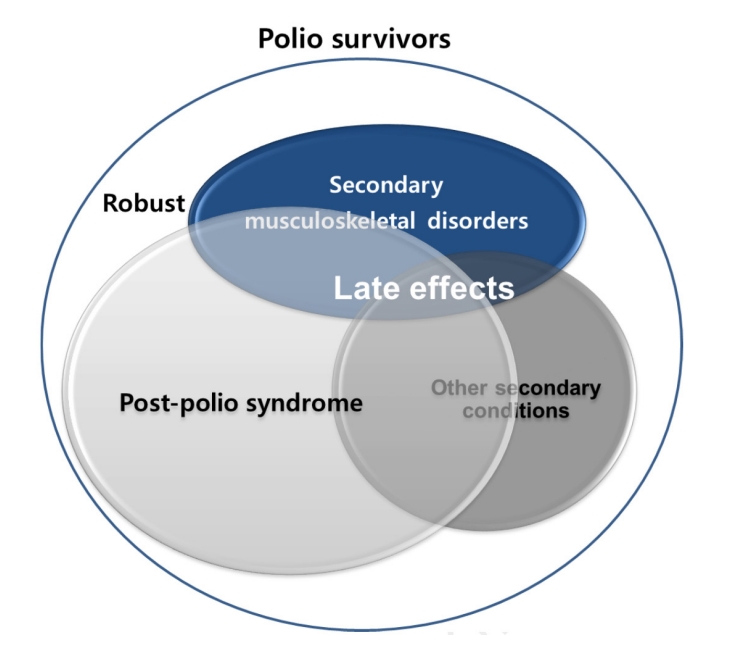
This study aimed to provide a comprehensive understanding of aging with disability among polio survivors who continue to live with long-term sequelae. Although poliomyelitis has been eradicated in most regions, survivors entering older age face a dual challenge, as age-related decline overlaps with pre-existing impairments, creating a need for integrated management strategies. This narrative review examined the epidemiology, clinical manifestations, and late effects of polio, with particular attention to post-polio syndrome, secondary musculoskeletal disorders, and other systemic conditions. International and Korean studies were compared to highlight similarities and contextual differences. Polio survivors frequently experience accelerated functional decline due to post-polio syndrome, fatigue, pain, musculoskeletal disorders (e.g., arthritis, osteoporosis, fractures), and cardiopulmonary dysfunction. Approximately 64% report major falls, with 35% sustaining fractures, often at vulnerable sites such as the hip or distal femur. Psychological distress, sleep disturbances, metabolic syndrome, and cardiovascular disease are also prevalent, further compounding frailty. In Korea, where most survivors are now over 60 years of age, epidemiological patterns differ from those of Western cohorts; however, systematic investigations remain limited. Polio survivors exemplify the dual burden of aging and long-term disability, underscoring the need to move beyond fragmented, symptom-focused care toward integrated, life course–oriented approaches. Anticipating and managing late effects, strengthening preventive strategies, and ensuring equitable healthcare access are essential for maintaining function, independence, and quality of life. Lessons drawn from polio survivors offer valuable insights for understanding aging with disability more broadly.
Citations
Citations to this article as recorded by
A silent epidemic? Poliomyelitis, disability burden, and social impact in Turkey (1942–1968) Ayşe Erkmen, Nevim Tüzün, Osman Erkmen BMC Public Health.2026;[Epub] CrossRef


 , Ga-Yang Shim
 First
First Prev
Prev