
• Contact us
  • E-Submission
ABOUT
BROWSE ARTICLES
JOURNAL POLICIES
FOR CONTRIBUTORS

Page Path

  • HOME
  • Browse articles
  • Current issue
9
results for

Current issue

Filter

Article category

Keywords

Authors

Funded articles

Current issue

Prev issue Next issue

Volume 49(4); October 2026

Editorial

[English]
In this issue: October 2026
Ji Yeon Byun
Ewha Med J 2026;49(4):e26.   Published online October 27, 2026
DOI: https://doi.org/10.12771/emj.2026.01725
  • 97 View
  • 5 Download

Review articles

[English]
Irritant contact dermatitis: beyond a diagnosis of exclusion
Da Yeon Kim, Jin Ju Lee, Hae Young Choi
Ewha Med J 2026;49(4):e27.   Published online October 2, 2026
DOI: https://doi.org/10.12771/emj.2026.01522
Irritant contact dermatitis (ICD) is the most common form of contact dermatitis and a leading cause of occupational skin disease, but remains underrecognized relative to allergic contact dermatitis (ACD). Direct chemical or physical injury to the epidermal barrier causes ICD, which can develop in anyone when exposure intensity or duration exceeds the skin’s repair capacity. ICD is increasingly understood to involve more than barrier disruption: it is an innate immune-mediated inflammatory disorder involving keratinocyte-derived cytokines, neutrophil recruitment, C-C motif chemokine ligand 2–C-C motif chemokine receptor 2–interleukin-1β signaling, Toll-like receptor 3, and inflammasome activation. Host factors, particularly atopic dermatitis and filaggrin loss-of-function variants, further influence susceptibility. Clinical phenotypes range from acute irritant reactions to chronic cumulative dermatitis, and occupational wet work is a major preventable exposure. Distinguishing ICD from ACD is difficult because their clinical and histopathological features overlap, they may coexist, and ICD-related barrier damage may facilitate subsequent allergic sensitization. Diagnosis therefore requires assessment of exposure history, lesion distribution, symptom quality, and temporal course, with patch testing when ACD is suspected. Molecular biomarker panels and noninvasive imaging or barrier-assessment techniques may improve diagnostic precision, but remain investigational. Management should prioritize identifying and removing irritants, reducing exposure, implementing appropriate protective measures, and restoring the epidermal barrier. Recognizing ICD as a distinct clinical entity, rather than simply a diagnosis of exclusion, is essential for accurate diagnosis and effective management of contact dermatitis in clinical practice.
  • 540 View
  • 25 Download
[English]
Korean Standard Series allergens and emerging sources: a narrative review
Jeewoo Choi, Hae Young Choi
Ewha Med J 2026;49(4):e28.   Published online September 21, 2026
DOI: https://doi.org/10.12771/emj.2026.01515
Purpose
This study aimed to address gaps in Korean Standard Series (KSS) information, highlight allergens with increasing patch test positivity, describe potential sources encountered in daily life, and provide guidance on selecting allergen-free alternatives.
Methods
Relevant information was identified from KSS patient instruction sheets (Chemotechnique, Sweden), T.R.U.E. TEST patient instruction sheets (SmartPractice, United States), the Contact Dermatitis Institute allergen database, the American Contact Dermatitis Society allergen information sheets, and searches of the PubMed database. English-language review articles, case series, and case reports identified using keywords related to the 25 KSS allergens were selected.
Results
Information was updated for the following allergens: nickel, cobalt, potassium dichromate, balsam of Peru, paraben mix, N-isopropyl-N'-phenyl-p-phenylenediamine, formaldehyde, p-tert-butylphenol formaldehyde resin, methylchloroisothiazolinone/methylisothiazolinone, colophonium, imidazolidinyl urea, and 2-mercaptobenzothiazole. Emerging sources included electronic devices, personal protective equipment, including masks whose use increased during the COVID-19 (coronavirus disease 2019) pandemic, nail products, and children’s toy slime. In addition, occupational allergen information sheets were developed for hairdressers, healthcare workers, dentists, dental hygienists, and cooks. The Korean-language allergen sheets are provided in the Supplementary Materials.
Conclusion
Because the KSS has not been revised for more than 2 decades, emerging allergen sources may be inadequately represented in the existing patient information. Accordingly, updated patient instruction sheets were developed to improve patient understanding and facilitate the practical application of patch test results.
  • 640 View
  • 17 Download
[Korean]
Language editing in the artificial intelligence era: achieving epistemic integrity: an expanded Korean translation
Yunhee Whang, Andrew Dombrowski
Ewha Med J 2026;49(4):e29.   Published online September 21, 2026
DOI: https://doi.org/10.12771/emj.2026.01529
Large language models (LLMs) are increasingly used to write and edit scientific manuscripts; however, their fluency can obscure mismatches between linguistic claim strength and evidential support. This tutorial examines such mismatches through the lens of epistemic integrity, defined as accurate alignment of scientific statements with the quality, strength, and scope of the underlying evidence. It presents sentence-level epistemic markers that require careful human judgment, including reporting verbs, hedges, tense choices, evaluative adjectives and adverbs, and local scope markers. Inappropriate modification of these features can overstate or understate certainty, strengthen or weaken a claim beyond what the evidence warrants, or distort an author’s intended emphasis. The tutorial also addresses discourse-level issues, including the need to clearly distinguish between results and interpretation, shifts in certainty across manuscript sections, consistency in scope limitations, and cumulative changes in evaluative tone. Because LLMs cannot independently assess study design, methodological limitations, disciplinary conventions, or evidential sufficiency, polished revisions may introduce epistemic miscalibration even when they are grammatically correct. Editors should therefore evaluate not only local wording but also the consistency of claims across the manuscript. Human editorial expertise remains essential for preserving rhetorical coherence, evidential accuracy, and scientific integrity in artificial intelligence–assisted academic writing, alongside attention to grammar, style, clarity, and readability.
  • 537 View
  • 17 Download

Original articles

[English]
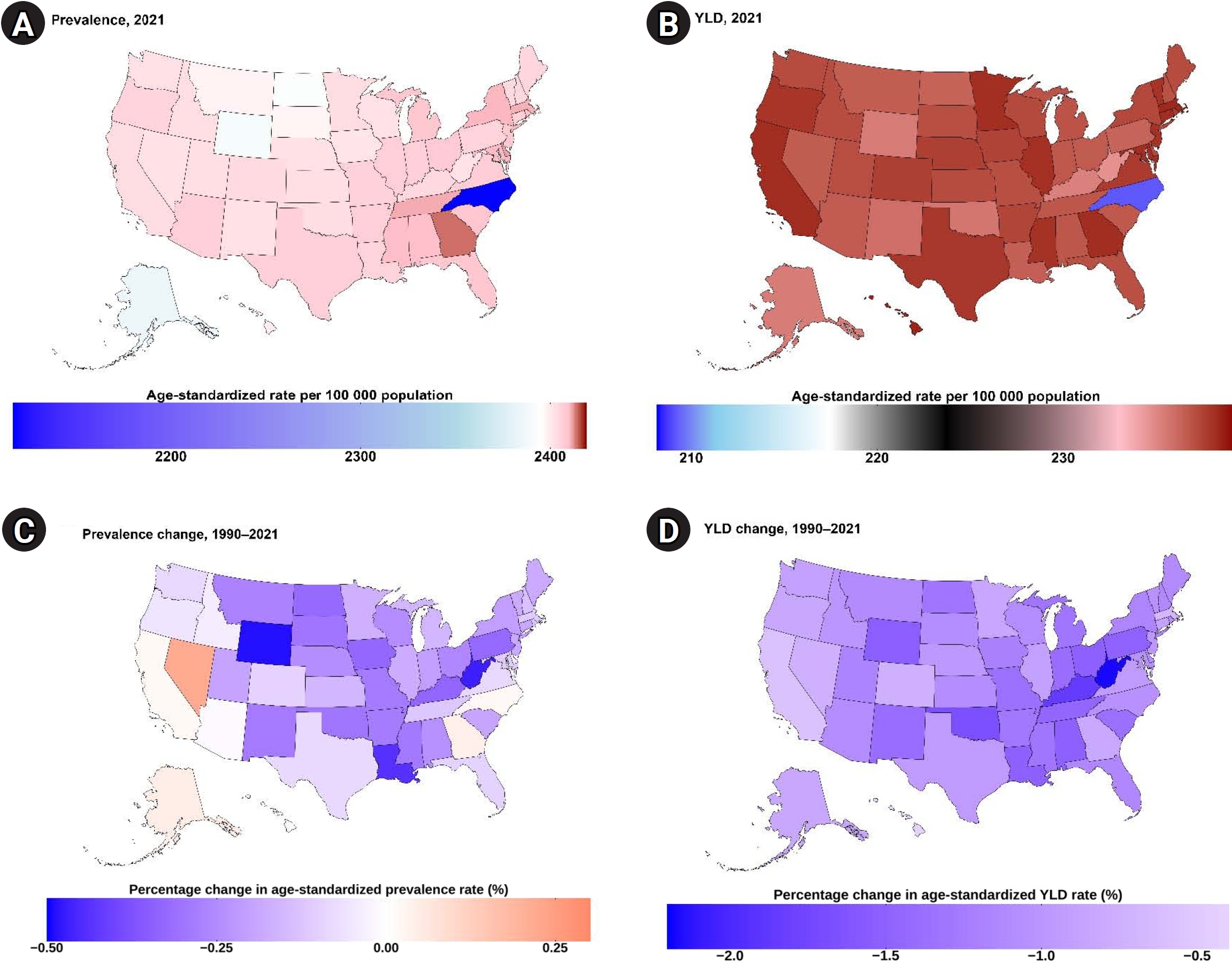
The burden of neck pain across US states, 1990–2021: a systematic analysis of Global Burden of Disease Study 2021 data
Somin Park, Dong Woo Shin, Jung-Hyun Park, Yoonkyung Chang, Moo-Seok Park, Hyun Kyung Kim, Tae-Jin Song
Ewha Med J 2026;49(4):e30.   Published online October 2, 2026
DOI: https://doi.org/10.12771/emj.2026.01270
Purpose
Neck pain is a leading musculoskeletal cause of disability in the United States. This study aimed to assess temporal, geographic, and demographic disparities in its burden across US states from 1990 to 2021.
Methods
Global Burden of Disease 2021 data for all 50 US states and the District of Columbia were analyzed for 1990–2021. Counts and age-standardized rates per 100,000 population for prevalence, incidence, and years lived with disability (YLD) were compared by region, state, sex, age group, and sociodemographic index (SDI) level.
Results
In 2021, neck pain accounted for 9,430,000 (95% uncertainty interval [UI], 7,400,000–11,590,000) prevalent cases, 1,900,000 (95% UI, 1,490,000–2,320,000) incident cases, and 920,000 (95% UI, 620,000–1,300,000) YLD, increases of 41.17%, 37.44%, and 38.72%, respectively, from 1990. Although age-standardized incidence increased globally by 1.18% (0.07%–2.39%) over 1990–2021, the United States had small declines in age-standardized incidence (−0.11%; 95% UI, −0.18% to −0.06%), prevalence (−0.20%; 95% UI, −0.32% to −0.10%), and YLD (−1.12%; 95% UI, −2.02% to −0.22%). Neck pain rates were highest in the District of Columbia, Georgia, and Delaware and lowest in North Carolina, Alaska, and Wyoming. The burden peaked at ages 40–49 years and was higher in females. Age-standardized YLD rates for neck pain were significantly positively correlated with the SDI (Spearman’s ρ=0.601, P<0.001).
Conclusion
The geographic and demographic disparities in neck pain burden across US states indicate a need for targeted interventions.
  • 519 View
  • 11 Download
[English]
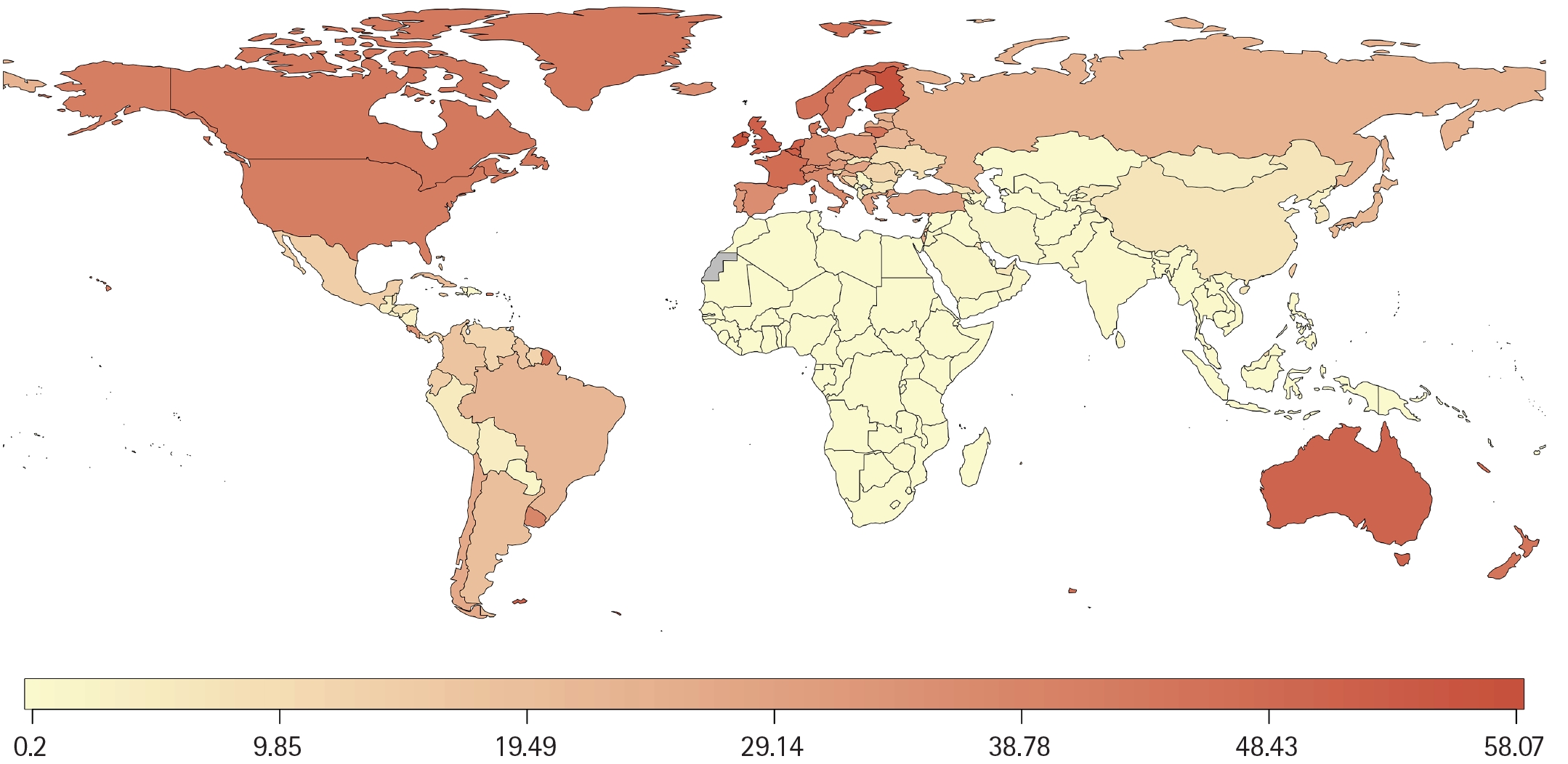
Global, regional, and national burden of motor neuron diseases, 1990–2021: a systematic analysis for the Global Burden of Disease Study 2021
Jung-Hyun Park, Dong Keon Yon, Min-Seo Kim, Yoonkyung Chang, Somin Park, GBD 2021 Motor Neuron Diseases Collaborators, Jae Il Shin, Tae-Jin Song
Ewha Med J 2026;49(4):e31.   Published online October 20, 2026
DOI: https://doi.org/10.12771/emj.2026.01480
Purpose
Healthcare planning and resource allocation require accurate estimates of the burden of motor neuron diseases (MNDs). This study evaluated the global impact of MNDs from 1990 to 2021 as part of the Global Burden of Disease (GBD) Study 2021.
Methods
GBD 2021 data were used to assess the global burden of MNDs from 1990 to 2021 in terms of prevalence, incidence, disability-adjusted life years (DALYs), and deaths. The relationship between MND burden and the Socio-demographic Index (SDI) was also examined.
Results
Globally, MNDs accounted for 272,732 prevalent cases (95% uncertainty interval [UI], 236,195–313,676), 64,178 incident cases (95% UI, 58,506–70,270), 1,040,566 DALYs (95% UI, 963,064–1,123,956), and 39,082 deaths (95% UI, 35,757–42,433) in 2021. The corresponding age-standardized rates per 100,000 people were 3.31 (95% UI, 2.86–3.80) for prevalence, 0.46 (95% UI, 0.42–0.49) for mortality, and 12.17 (95% UI, 11.24–13.15) for DALYs. From 1990 to 2021, the numbers of prevalent and incident cases increased, but their age-standardized rates decreased by 1.36% and 4.69%, respectively. By contrast, the age-standardized mortality rate increased by 19.84%. MND burden was generally higher in regions with a high SDI, although rates in high-income Asia Pacific were relatively low compared with those in regions with similar SDI values.
Conclusion
From 1990 to 2021, the absolute burden of MNDs increased, age-standardized prevalence and incidence rates declined slightly, and mortality-related burden increased. These trends underscore the need for evidence-based national and global healthcare planning. Geographic variation in MND burden may reflect regional differences in the roles of sociodemographic and genetic factors.
  • 363 View
  • 15 Download
[English]
Purpose
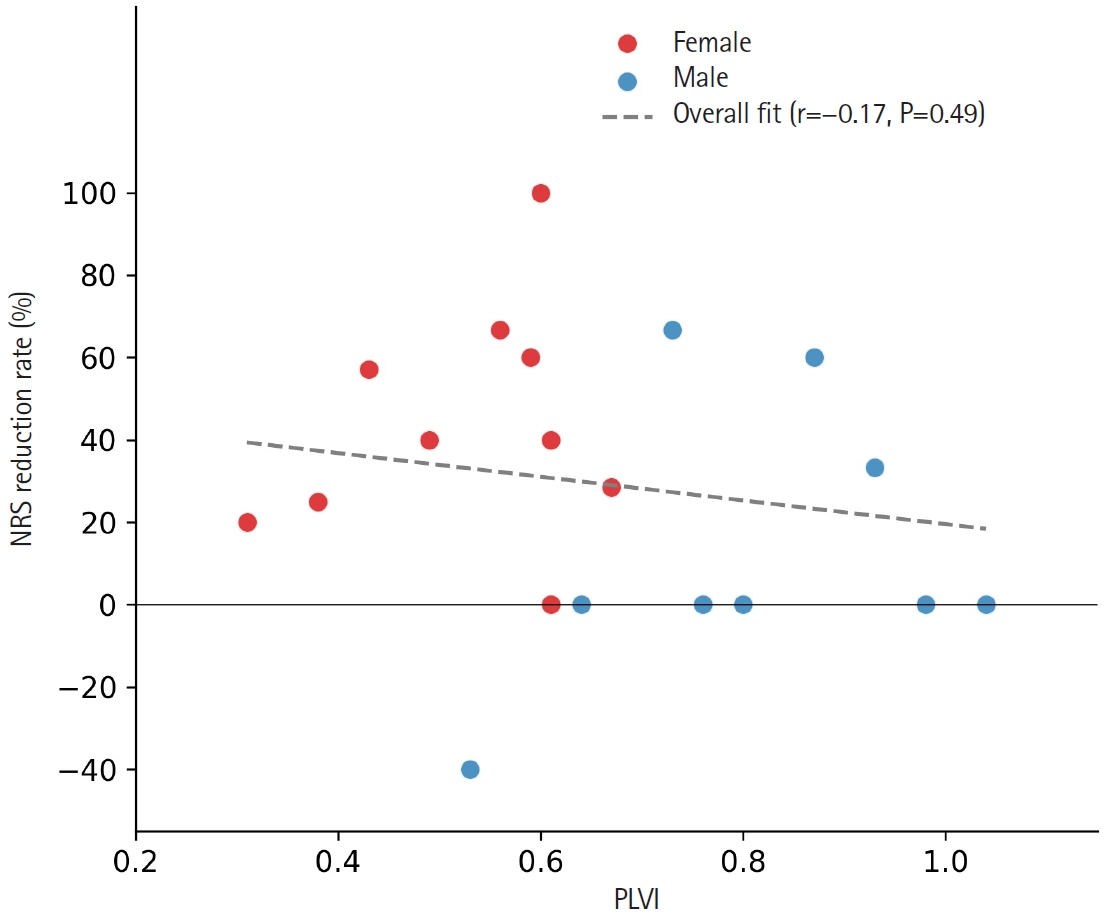
The psoas–lumbar vertebral index (PLVI), a marker of central sarcopenia measured using computed tomography (CT) or magnetic resonance imaging (MRI), has been linked to the development of postherpetic neuralgia (PHN). Whether PLVI predicts short-term pain relief after pulsed radiofrequency (pRF) treatment of the dorsal root ganglion (DRG) in established PHN remains unknown. This pilot study examined the association between PLVI and the reduction in numeric rating scale (NRS) pain scores 1 month after pRF.
Methods
Patients with PHN who underwent DRG pRF and had CT or MRI scans available for PLVI measurement were retrospectively reviewed. Correlations of the NRS reduction rate with PLVI and other variables were assessed, with 95% confidence intervals (CIs). Patients were divided into low- and high-PLVI groups using sex-specific medians and compared; multivariable regression was adjusted for sex. A supplementary responder analysis used thresholds of ≥30% and ≥50% reduction.
Results
In 19 patients, NRS scores decreased from 4.8±1.7 to 3.2±1.7, with a reduction rate of 29.3%±34.0%. PLVI was not significantly correlated with the reduction rate (r=−0.17; 95% CI, −0.58 to 0.31; P=0.49); neither the reduction rate (P=0.71) nor responder rates differed between the low- and high-PLVI groups. Male sex was associated with a smaller reduction (adjusted B=−47.2 percentage points; 95% CI, −90.9 to −3.5; P=0.036), although the unadjusted group comparison was not significant (Welch P=0.051) and 15 variables were tested without correction for multiple comparisons.
Conclusion
This pilot cohort showed no detectable association between PLVI and short-term pain relief after pRF; its small size precludes establishing the absence of an association. The exploratory sex difference warrants investigation in larger prospective studies with comprehensive sarcopenia assessment.
  • 297 View
  • 7 Download

Case report

[English]
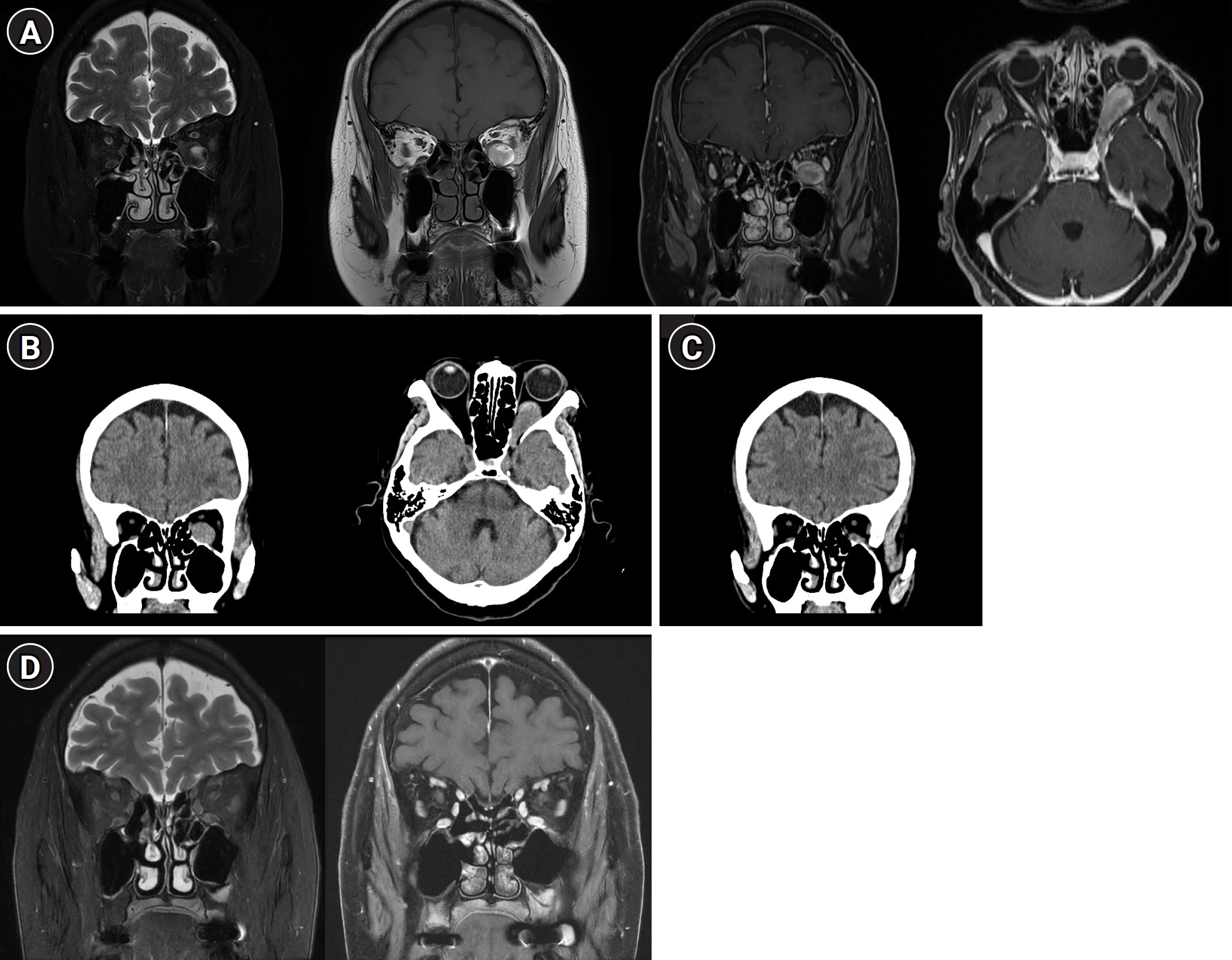
Spontaneous retrobulbar hematoma on serial computed tomography and magnetic resonance imaging: a case report
Ra Gyoung Yoon, Bo Eun Lee
Ewha Med J 2026;49(4):e33.   Published online September 21, 2026
DOI: https://doi.org/10.12771/emj.2026.01501
An 83-year-old woman presented with a 10-day history of sudden-onset diplopia in the left eye, with no preceding trauma or anticoagulant use. Initial orbital magnetic resonance imaging (MRI) on day 10 revealed a well-circumscribed retrobulbar lesion along the left inferior rectus muscle. The lesion showed heterogeneous T1 hyperintensity, low-to-intermediate T2 signal, and no definite solid enhancement, raising concern for a hemorrhagic orbital mass or neoplasm. Serial noncontrast computed tomography (CT) on days 20 and 49 showed progressive decreases in lesion size and attenuation. Follow-up MRI on day 180 confirmed complete spontaneous resolution, with no residual abnormality or underlying neoplasm. This case demonstrates that serial CT and MRI can guide safe conservative management of spontaneous retrobulbar hematoma and help avoid unnecessary surgery in clinically stable patients.
  • 440 View
  • 10 Download
Correspondence
[English]
Role-play in graduate genetic counseling education: a practicum experience in South Korea
Su-A Lee, Min Seon Park, Arang Kim, Jungwon Huh
Ewha Med J 2026;49(4):e34.   Published online September 21, 2026
DOI: https://doi.org/10.12771/emj.2026.01452
Purpose
Clinical fieldwork in genetic counseling education is constrained by limited training sites, shortages of clinical supervisors, and administrative burdens. Simulation-based learning, including role-play, has therefore been used to support development of counseling competencies. This study described the development, implementation, operational structure, and feasibility of a role-play-based practicum in a graduate genetic counseling program.
Methods
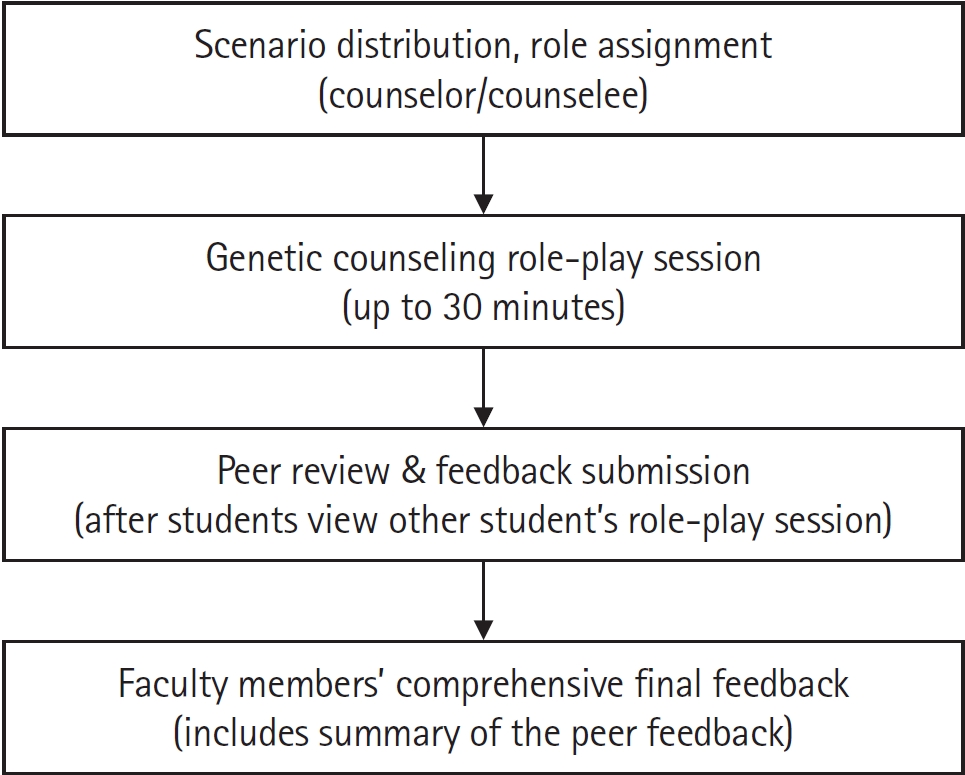
This retrospective descriptive report was based on Genetic Counseling Practicum, a spring 2024 course for 11 third-semester students in a graduate genetic counseling program in South Korea. Twenty-two role-play scenarios were developed, including 11 hereditary cancer cases and 11 pediatric or adult genetic disorder cases. The scenarios simulated pretest and posttest encounters during a 6-week, 2-block practicum. Students alternated between counselor and counselee roles, recorded sessions outside class time, and received domain-guided peer and faculty feedback.
Results
The scenarios covered patient ages from infancy to late adulthood and included somatic and germline pathogenic variants, a negative multigene panel result, and chromosomal or epigenetic abnormalities. All 22 planned sessions were completed and recorded as scheduled, and all 11 students completed their assigned sessions. The planned assignment, recording, review, and feedback procedures were completed without documented omissions. Approximately 11 scheduled class hours were devoted to feedback, and no external clinical sites or supervisors were required.
Conclusion
This study presents an operationally feasible model for a role-play-based practicum with diverse scenarios in a graduate genetic counseling curriculum. It may serve as a practical reference for programs considering similar simulation-based training.
  • 389 View
  • 7 Download
TOP